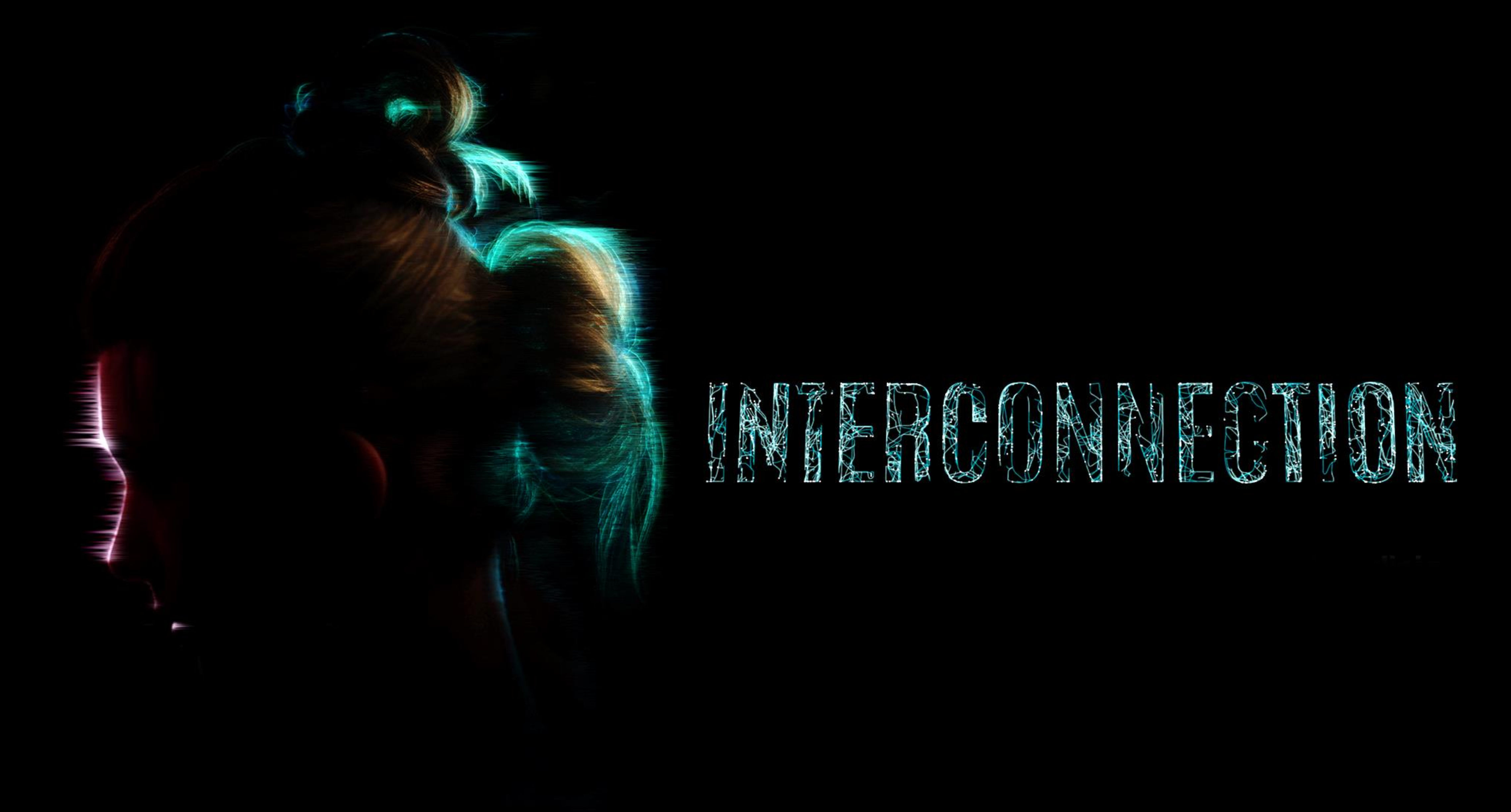
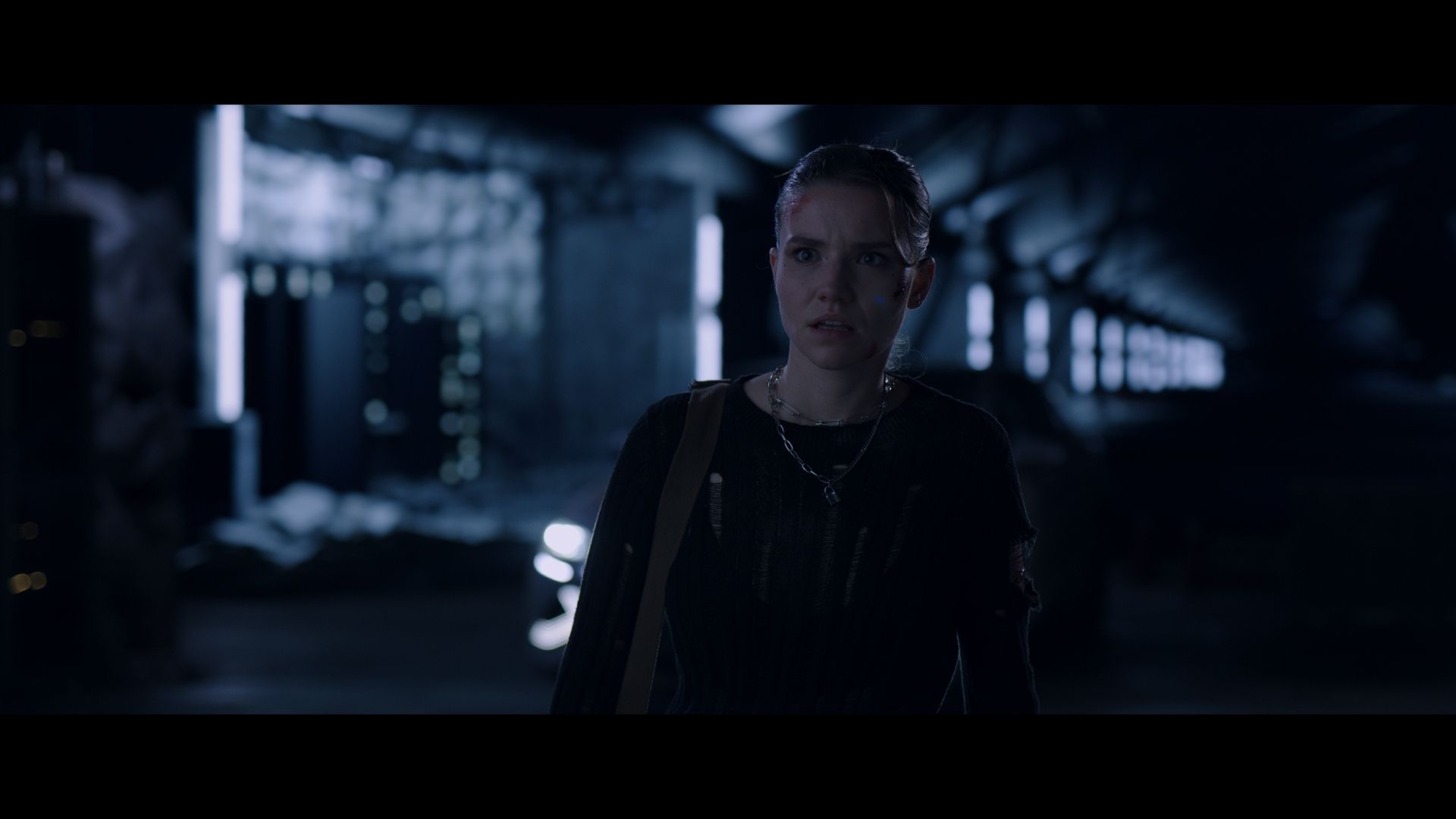
This lesson introduces INTERCONNECTION, a sci-fi miniseries that became the testing ground for exploring how galvanic skin response data can reveal audience engagement. It shows how neurometrics, paired with traditional feedback, can enrich creative decision-making and highlight new ways of connecting production technology with audience research.
In spring 2025, Film University Babelsberg KONRAD WOLF conducted an experimental case study that examined how neurometrics can inform creative decision-making in film production. The study focused on the use of galvanic skin response (GSR) data as a means to gain insight into audience reactions during the production of the soft lock version of an episode of the science fiction miniseries INTERCONNECTION. A soft lock refers to an almost finalized edit in which the structure and timing of the film are stable, but details may still be adjusted. At this stage, visual effects, sound, and music remained placeholders, leaving room for refinements.
@Interconnection, 2025
INTERCONNECTION was selected as the case study because the project and its creator, Marco Braune, consistently pursue an experimental and technologically forward-looking approach. This openness to technological innovation made the production particularly suitable for testing new methods of audience research.
The INTERCONNECTION team welcomed the opportunity to complement their creative process with neurometric feedback. By measuring biometric responses from a test audience, the study examined how GSR data might provide additional perspectives on narrative tension, emotional engagement, and the perception of specific scenes. Rather than replacing traditional creative decision-making, the study explored how such data could serve as an additional layer of evidence, potentially enriching artistic choices in future productions.
This case study is presented here as a concrete example within the KreaTech project: it illustrates how emerging technologies in production can be connected with experimental methods of audience analysis, offering valuable insights into both film practice and research.
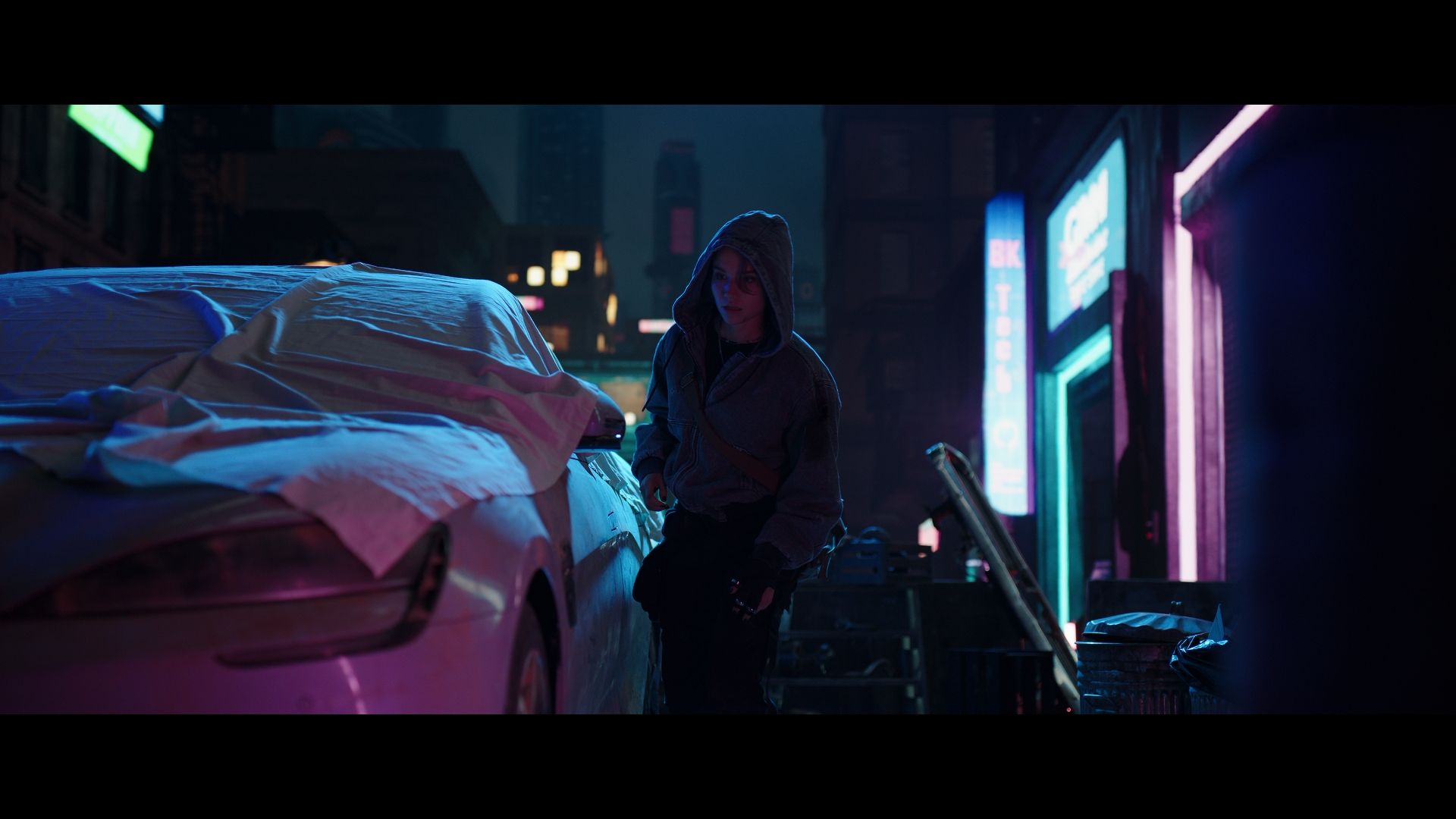
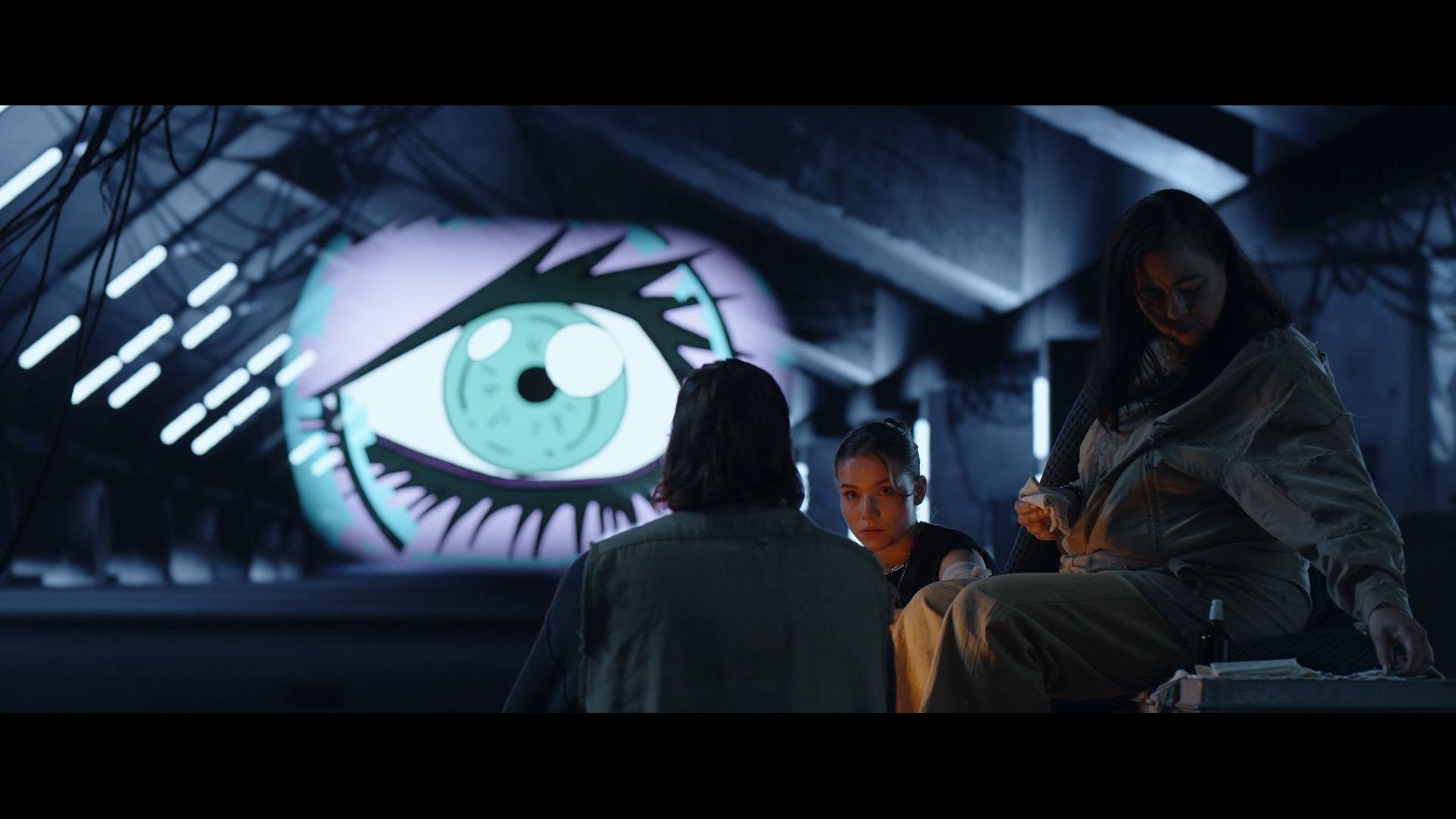
Set in the year 2072, the story follows Kira, a 26-year-old loner whose life takes a shocking turn when she is suddenly wanted for murder. The true culprit turns out to be her own digital double—an uncanny doppelgänger emerging from a parallel digital universe. As Kira and her counterpart try to undo the crime, they discover that much more than Kira’s freedom is at stake.
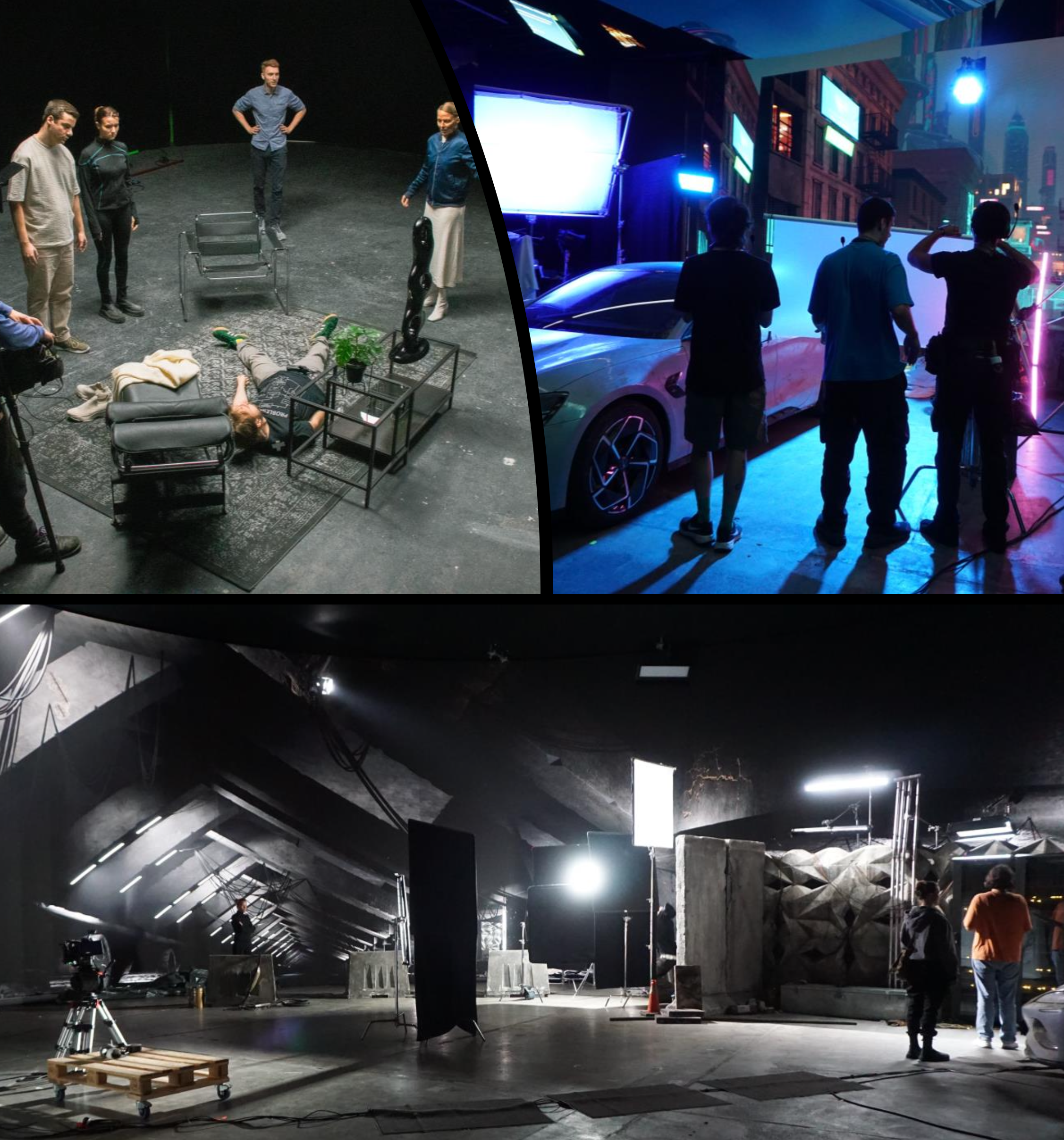
The miniseries consists of five episodes, each with a runtime of six to ten minutes. Filming took place in autumn 2024, with ten production days at LEDcave Berlin and additional work in the studios of the Film University Babelsberg. A central feature of the production is the LED wall, which is not only used as a backdrop but also as an active narrative element. It serves as the visual and conceptual bridge between the protagonist’s physical environment and the digital parallel universe.
Impressions from the INTERCONNECTION set. @Interconnection, 2025
The production was realized using virtual production and in-camera VFX techniques. Key elements included a 40 × 6.5 meter LED wall, the CarCave setup, and a complementary greenscreen stage. The creative team also explored the integration of in-camera animation sequences, the use of switching the LED wall off as a visual effect, and a lighting design that connected Sumo SKY bars to Unnreal Engine to animate light cues in real-time.
INTERCONNECTION thus is a gripping science-fiction tale and a showcase for the creative and technological possibilities of virtual production. It demonstrates how LED walls and digital workflows can move beyond background scenery to become integral parts of storytelling, opening new pathways for narrative cinema in the digital age.
INTERCONNECTION is set to be published in spring 2026!
@Interconnection, 2025
@Interconnection, 2025
@Interconnection, 2025
@Interconnection, 2025
Neurometrics Case Study
For this case study, we presented the first episode of the miniseries in its soft lock stage. At this point, editing was complete, while visual effects, sound, and music were still placeholders, sufficient to convey the full creative vision but leaving room for later refinements. These could still be potentially influenced by the results of the study.
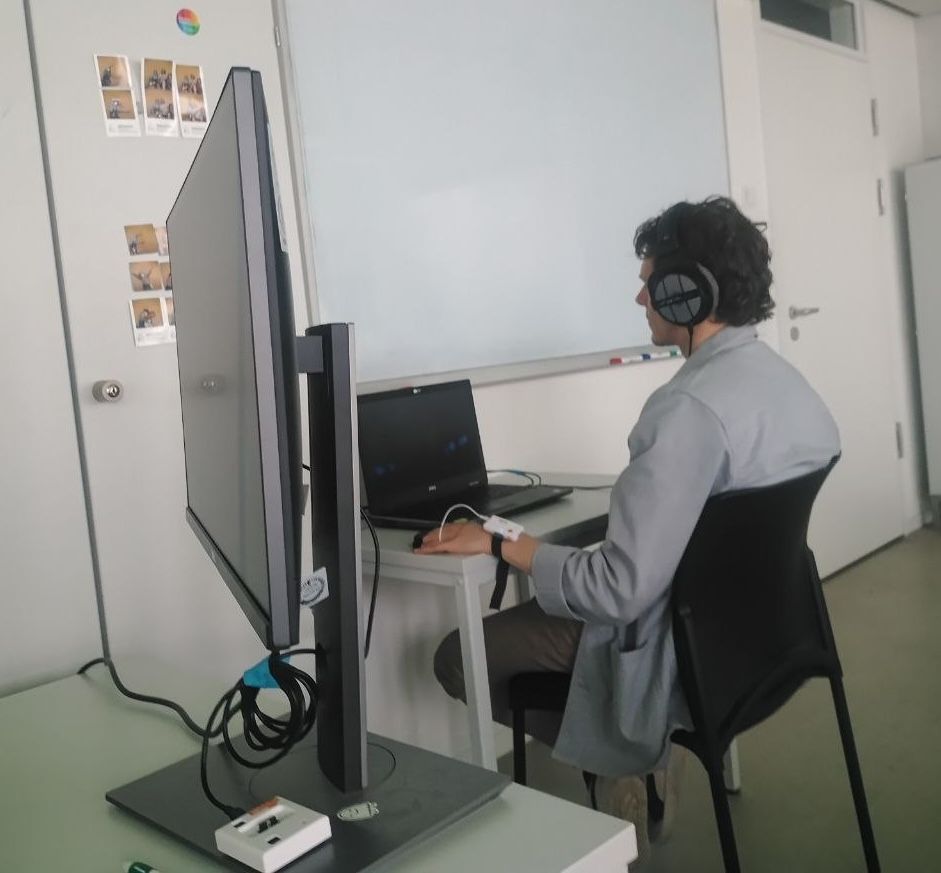
The episode was screened individually to nine participants. Each session followed a structured study template under controlled testing conditions, with all external interruptions minimized. Participants were spatially focused on watching a screen with headphones, while the study conductor sat nearby, slightly out of their focus, to monitor the process without distracting from the viewing.
The spatial setup of the study.
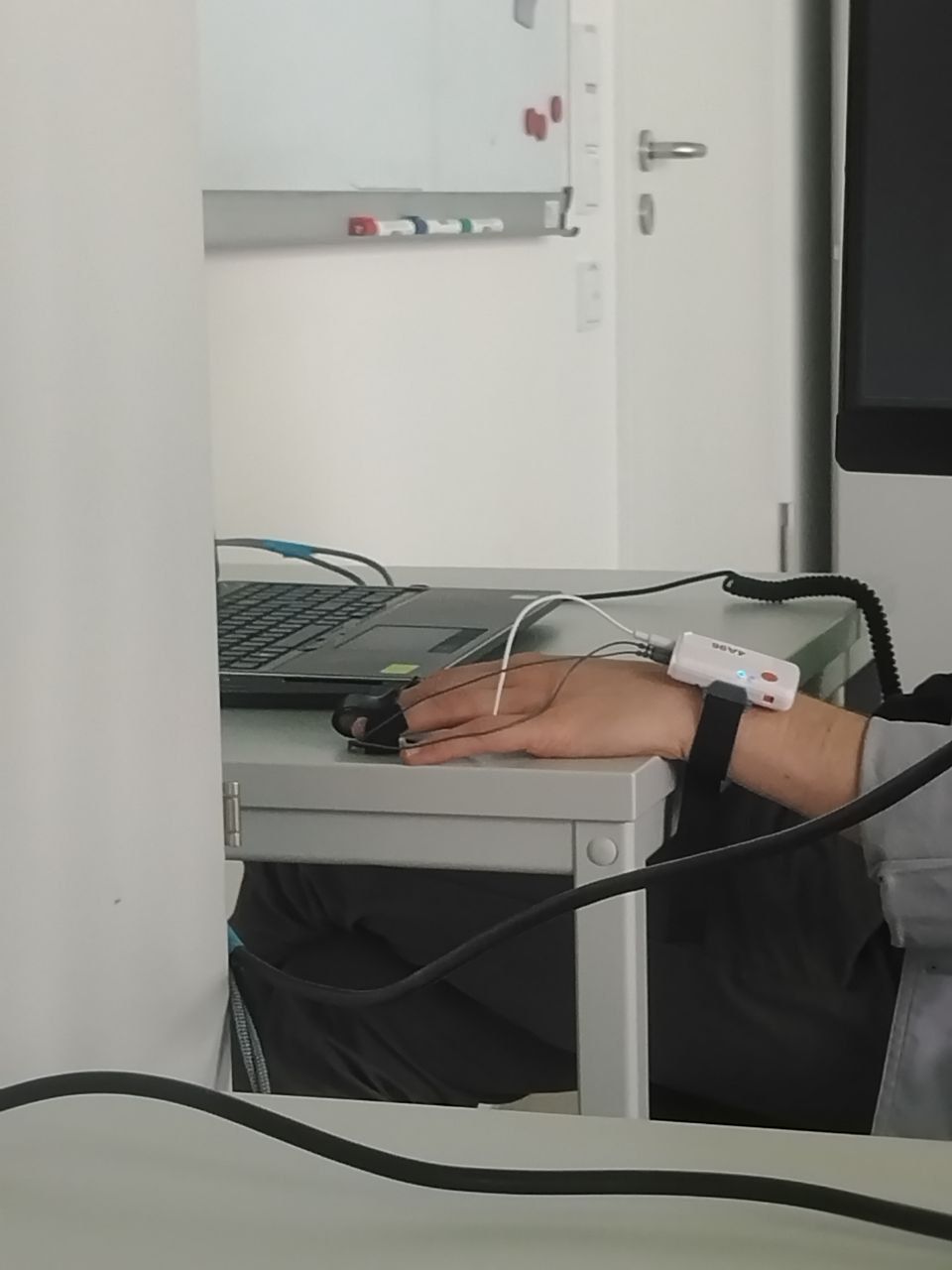
The procedure began with a welcome and short introduction, followed by connecting the participant to the GSR device. As GSR device, the Shimmer3R GSR+ Unit was used. The Shimmer 3 is a compact, wireless, research-grade wearable sensor platform that records physiological and motion data (e.g. ECG, GSR, IMU).
Participants wears the Shimmer device.
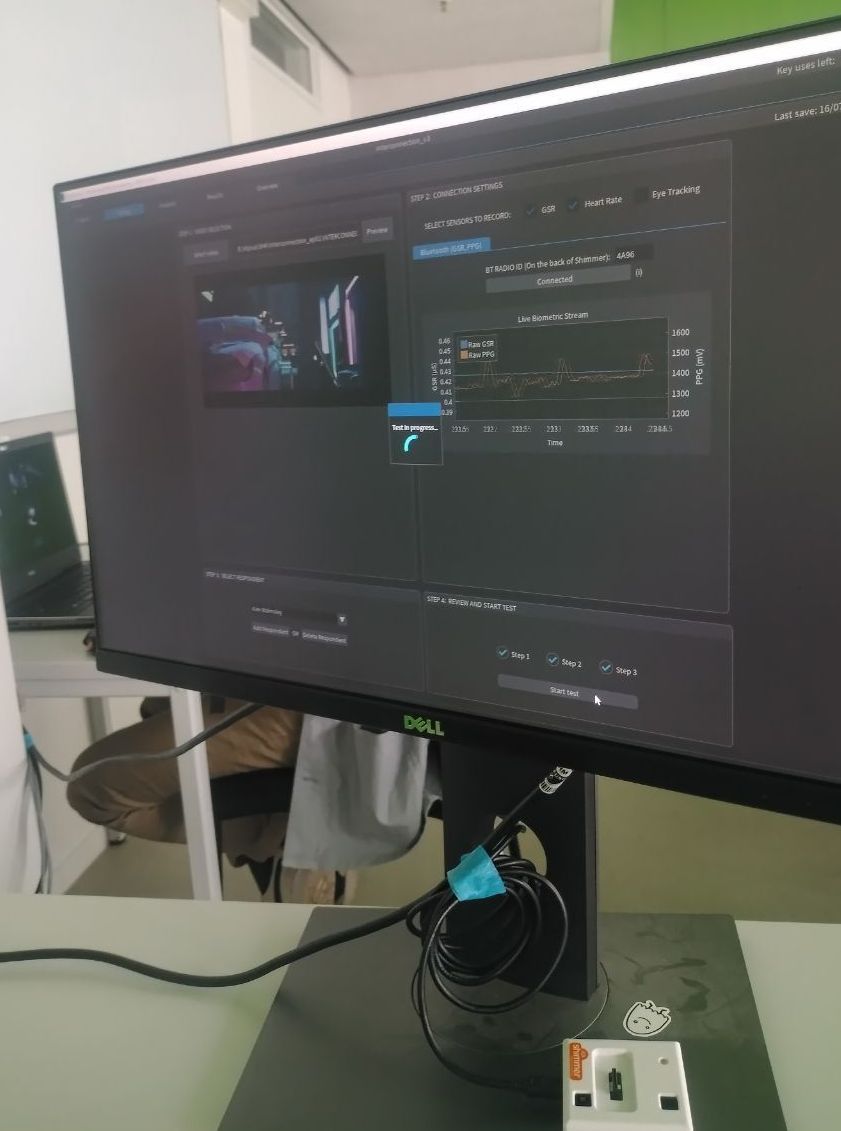
After this setup, the first episode of INTERCONNECTION was shown. To establish a reference point for comparing emotional responses across participants, the screening concluded with a short clip of an attacking tiger, which consistently triggered a strong physiological reaction in all participants. The GSR data was tracked and visualized with the Cinematronics's Biosignal Platform.
Cinematronics's Biosignal Platform for data tracking and visualization.
Once the viewing was complete, the GSR device was disconnected and participants were asked a set of prepared qualitative and quantitative questions about their experience and individual reactions.
The study was executed with the following template as step-by-step description for the conductor of the study. Ideally, the study conductor should check off all boxes when done to ensure and document a proper study execution.
Study Template
Study number:
Name of the participant:
Name of the study conductor:
Interview setup:
Interview location:
Date:
Start time of the study:
End time of the study:
Start of the interview
(this part is not recorded)
Brief welcome
Introduce yourself
Turn off all mobile phones
Give a short overview of the study:
Brief introduction of project and technology
Time for questions
Start of the audio recording
Consent declaration questions
Start of the skin data recording
You will watch various videos, including a short film. During this, we will measure your emotional responses via a sensor on your hand.
Questionnaire as interview
End of study
Introduce the project
Ask if there are any questions from the participant before the interview starts.
Reflect on the overall situation and technology – all ready?
Read and check the consent question
Consent Declarations
Have you been informed of the procedure and purpose of the following study, and are all of your questions answered to your satisfaction? The participant answers:
Yes
No
Do you agree to the audio recording of the study? The audio is meant for the transcription of the study. The participant answers:
Yes
No
> START THE AUDIO RECORDING <
Introduction
What is your age:
prefer not to say
Which gender do you identify with:
female
male
diverse
prefer not to say
Non-Disclosure Agreement: Do you agree not to share any data or information of this study which is disclosed during the study and that is proprietary to us and the creators of the shown materials and that is not generally known to the public or that has not yet been revealed, whether in tangible or intangible form? The participant answers:
Yes
No
Do you agree to the recording of your Galvanic Skin Response data with the Shimmer device? The participant answers:
Yes
No
> PUT ON THE SHIMMER DEVICE <
> START THE GSR DATA RECORDING <
Verify that the device is recording.
Explain that the participant should focus on watching the movie and be comfortable. There is absolutely not performance aspect to the study.
> START THE VIDEOS <
> STOP THE GSR DATA RECORDING <
> DETACH SHIMMER <
Questionnaire
Overall, what do you think about the episode?
Re-cap of the Captured Data
Which scenes, visuals, audio, or edits did you particularly notice?
What made you notice them?
Do you judge this positively or negatively?
Were there any parts of the film that you found confusing or difficult to follow? Please describe why.
Scene Moments
Ask the following questions for all moments, where there are major data changes (highs, low, flats) measured.
In [scene A, moment 1]
Please describe what you noticed at that moment.
Please describe your emotions at that moment.
Overall Assessment of the Episode
Describe your emotional state during the film? Choose all that apply.
(Ideally, show options on a screen)
Relaxed
Tense
Excited
Sad
Happy
Angry
Bored
Interested
Why did you select this rating?
Anything you could describe further?
Rate the emotional impact of the film on you on a scale of 1 to 10.
(Emotional impact: how emotionally affected and engaged were you during the episode)
Why did you select this rating?
Anything you could describe further?
How engaging did you find the storyline on a scale from 1 to 10?
Why did you select this rating?
Anything you could describe further?
How effective were the characters in enhancing your emotional experience on a scale from 1 to 10?
Why did you select this rating?
Anything you could describe further?
How effective was the soundtrack in enhancing your emotional experience / engagement on a scale from 1 to 10?
Why did you select this rating?
Anything you could describe further?
How effective were visuals in enhancing your emotional experience on a scale from 1 to 10?
Why did you select this rating?
Anything you could describe further?
How do describe the quality of the visuals?
Context Assessment
What genre do you think the episode is?
Do you usually like the genre?
Have you seen anything similar? If yes, what?
Would you recommend this episode to others to watch?
Explain your decision.
Would you later want to see the other episodes, the whole season?
Explain your decision.
Final Thoughts
Is there anything else in this context that you would like to mention that you consider relevant to the topics of this study?
> END OF STUDY <
Ask if there are any questions from the participant
Say thank you and goodbye 😀
After the Participant Has Left
Save all recordings
Check that all files are valid
Upload the recording(s)
INTERCONNECTION Results
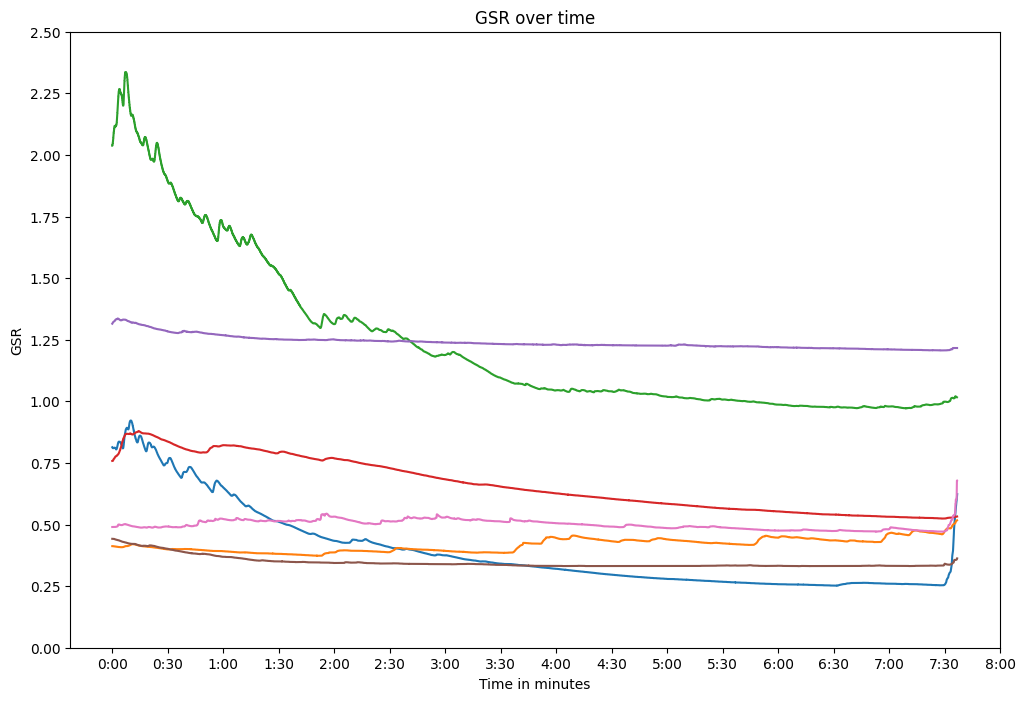
The case study had an exploratory character, and the number of participants was too small to allow for reliable quantification of the results. What can be shown, however, is a rough overview of the GSR responses from all participants, with each color representing a different individual (at 7:32 the “attacking tiger” stimulus was presented).
Overview of all captured GSR data.
In the middle section of the episode, the GSR data indicated a relatively steady pattern, with few noticeable fluctuations. This phase introduced little new information and did not elicit strong physiological arousal. Such a pattern does not imply that the sequence was ineffective or uninteresting; rather, it reflects the absence of the intense responses typically triggered by action scenes, horror elements, or other high-arousal visuals.
At the beginning of the episode, clear spikes were recorded, corresponding to moments of action as expected. Toward the end, smaller peaks appeared, most likely linked to the deepening interaction between the two characters and the audience’s increasing emotional engagement. Overall, the data suggests a shift from initial action-driven arousal to more subtle, character-based involvement as the episode progressed.
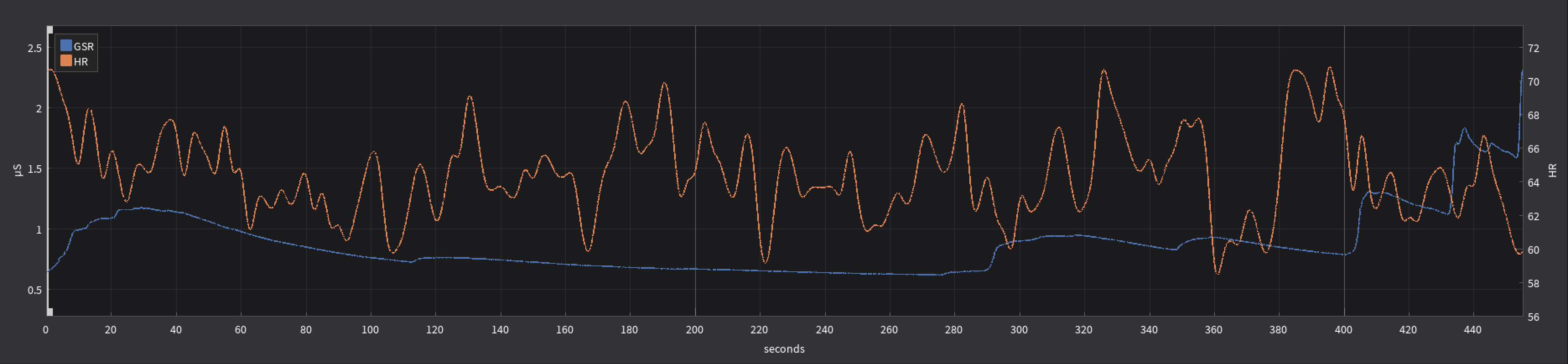
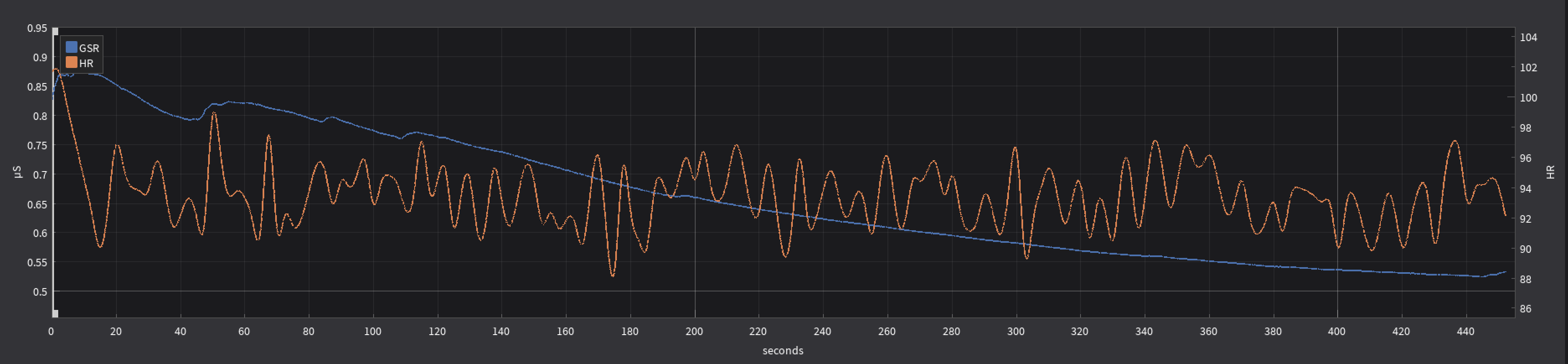
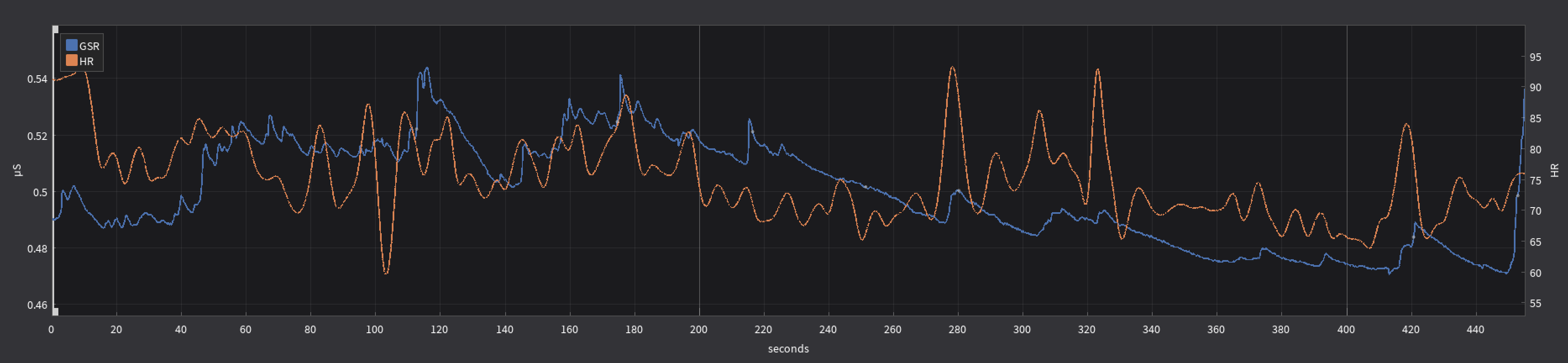
Participants’ comments added important context to the data. Several highlighted lighting changes, which is notable given the virtual production setup, and one participant showed a clear physiological reaction to such a cue. Two viewers who had visited the set responded most strongly to moments they personally remembered, which illustrates how off-screen experiences influence on-screen engagement. An actress in the group recorded her highest peaks during the final character interaction and gave detailed feedback on performance and staging, linking her physiological responses to professional expertise. Surprisingly, the first meeting of the two characters did not trigger a strong reaction, which suggests that targeted adjustments, for example with sound and music, could help strengthen audience engagement.
Exemplary heart rate and GSR data of a participant, visualized in Cinematronic's Biosignal Platform.
Exemplary heart rate and GSR data of a participant, visualized in Cinematronic's Biosignal Platform.
Exemplary heart rate and GSR data of a participant, visualized in Cinematronic's Biosignal Platform.
Even with such a small sample, the data is valuable as a proof of concept: it demonstrates how biometric responses can be recorded, visualized, and compared across individuals, providing a starting point for discussion and for designing larger, more systematic studies.
Scenario Summary
In summary, the case study described with the previously presented study template as follows.
This study examined the potential of neurometrics, specifically galvanic skin response (GSR), to provide insights into audience engagement during film production. The aim was to identify patterns of emotional arousal in relation to narrative structure, technical choices, and aesthetics. The study explores how physiological data can complement traditional evaluation methods such as test screenings and qualitative feedback, offering an additional perspective for creative decision-making.
Requirements
Production stage
The study took place during the postproduction stage, with the soft lock edit of the first episode of the miniseries INTERCONNECTION.
Sample size: too small for statistical conclusions, but suitable for a proof of concept.
Roles & positions
Study conductor to manage sessions, to operate GSR setup, and to oversee data collection.
Researcher to analyse findings and share them with the creative team.
Budget
The financial resources required were modest. Main cost drivers were access to facilities, participant management, GSR hardware and software, and personnel time for running and analyzing the study.
Technical requirements
GSR sensors and recording device: The study used the Shimmer3 GSR+ device, a wireless sensor capable of recording galvanic skin response, photoplethysmography (PPG), and accelerometer data. The device was connected via Bluetooth to a laptop for real-time monitoring and data logging. Electrodes were attached to the participant’s fingers to capture skin conductance signals.
Cinemetric software: Data were collected and visualized using the Cinematronic Biosignal Platform, which enables configuration of sampling rates, live monitoring of biometric signals, synchronization to media playback, and export of data in standard formats for further analysis (e.g. CSV). The platform also supports embedding questionnaires and linking biometric peaks to annotated moments in video.
Screen and headphones: Participants viewed the episode on a calibrated display with headphones to ensure focus and minimize environmental noise.
Controlled environment: The sessions were carried out in a controlled room with minimal external interruptions. The study conductor was present in the room, seated slightly out of the participant’s focus to observe without distraction.
Study Design
Variable isolation: The variable tested was emotional arousal. GSR data were used to capture moments of heightened engagement. A short high-arousal stimulus clip (an attacking tiger) was added at the end of the screening to provide a calibration point across participants.
Study execution
Welcome and introduction.
Connection of participant to the GSR device.
Screening of the soft lock edit of the episode.
Presentation of the calibration clip.
Disconnection of the device.
Collection of qualitative and quantitative feedback through pre-defined questionnaire.
Expected Results & Integration of Study Results into Film Production
Anticipated biometric patterns: Peaks in GSR were expected during action or tension, with lower arousal during quieter, dialogue-driven scenes. The calibration clip was expected to generate strong and consistent responses.
Implications for creative or technical decisions: Results were anticipated to highlight which scenes engaged viewers most strongly and where responses were weaker. These insights could inform adjustments in editing, pacing, music, and sound design.
Integration into production workflows: Findings could be recognized during the postproduction phase, when refinements are still possible. This included changes in editing, the guided addition of sound effects and music, and potentially adjustments to planned VFX.
Scenario Conclusion
Realism: The study setup is feasible within real production contexts, particularly in research-oriented or experimental environments. The technical requirements are relatively low and can be integrated into standard workflows, although a significant amount of time and a larger number of participants would be needed to generate reliable and generalizable results.
The director expressed a clear interest in conducting further iterations of the study, for example after the addition of sound and music, with a focused examination of how these audio components influence audience responses.
Additional considerations: The small sample size prevents quantitative generalization, and results must be interpreted cautiously. Ethical considerations include informed consent, participant comfort, and responsible handling of data.
Further ideas: Future work could involve larger and more diverse participant groups, the inclusion of other biometric measures such as eye tracking or heart rate, and the application of neurometric testing earlier and iteratively in production.
Conclusion
This exploratory case study shows how neurometrics, even on a small scale, can provide meaningful insights into audience engagement and open new perspectives for creative decision-making. While not a substitute for artistic judgment, GSR data offered complementary evidence that highlighted both expected reactions and surprising gaps, underscoring the potential of biometric feedback to enrich future film production and research.