This lesson maps the filmmaking pipeline from development to distribution, showing how each stage shapes creative and technical outcomes. It sets the groundwork for experimental scenarios, such as testing scripts, performances, editing, or trailers, where neurometrics can be applied to connect audience experience with production choices.
The journey from initial concept to finished film involves a complex, iterative process that can span months or even years. While each project is unique, the filmmaking pipeline generally follows a series of interconnected phases that provide the framework within which artistic choices are realized and evaluated, including through tools such as neurometrics.
Development begins with generating ideas, refining them into a synopsis and treatment, and eventually writing the screenplay through multiple drafts and revisions. Preproduction encompasses all planning activities before filming, including casting, assembling the crew, designing sets and costumes, scouting locations, creating schedules and budgets, and addressing legal and logistical issues. Production (or principal photography) is when the film is shot, with directors, actors, cinematographers, and technical teams working together on set. Postproduction shapes the raw material into the final film through editing, sound design, music, color grading, and visual effects. Finally, distribution and exhibition bring the work to audiences through cinemas, streaming, television, or physical media, supported by marketing and sales efforts.
The scale of these stages can vary from small, independent projects to large studio productions that employ hundreds of people. Today, Virtual Production (VP) is reshaping the pipeline: digital sets and real-time rendering move much of the creative decision-making to preproduction and allow backgrounds and lighting to be integrated directly on set. This reduces the need for location shoots, enables new creative possibilities, but also brings challenges, such as spatial limitations or technical risks.
Introduction
The journey from initial concept to finished film involves a complex, iterative process that can span months or even years. Film production is not a single act but a collaborative effort that moves from development and preproduction to shooting, postproduction, and distribution. Each stage brings its own creative decisions, technical requirements, and organizational challenges, together shaping the final work and its impact on audiences.
Understanding this pipeline is essential before turning to neurometrics. By mapping out how films are made, we can identify where biometric data and neurometric methods may add value: measuring attention during editing, assessing emotional resonance in test screenings, or evaluating stress and workload in new production environments such as virtual setsY. The overview of filmmaking stages provided here offers both the context and the vocabulary needed to situate neurometrics within creative workflows.
In the sections that follow, the focus will be on how the traditional production pipeline functions and how emerging technologies like Virtual Production are transforming it. This knowledge provides the foundation for investigating neurometrics as a novel tool in film production.
Film Production Stages
Idea Generation and Development
The creative process begins with concept development, which can originate from various sources: original ideas, adaptations of existing works (books, plays, true stories), remakes, or commissioned projects. During this phase, creators explore the core premise, themes, and potential audience appeal.
Key activities include market research, initial creative discussions, and assessing commercial viability. Writers, producers, and development executives collaborate to refine the concept's potential. This phase often involves multiple iterations as ideas are tested, refined, or sometimes abandoned.
Synopsis and Treatment Development
Once a viable concept emerges, it's developed into a synopsis (1-2 page summary) and treatment (detailed outline of 5-30 pages). The synopsis provides a concise overview of the story, main characters, and basic plot structure, while the treatment expands this into a more detailed narrative that includes major scenes, character arcs, and tonal elements.
Treatments serve multiple purposes: they help writers organize their thoughts before scripting, provide material for pitching to investors or studios, and establish the creative vision that will guide subsequent development. This document often undergoes several revisions based on feedback from producers, studio executives, or potential financiers.
Screenplay Development
Screenplay writing transforms the treatment into a properly formatted script, typically 90-120 pages for feature films. This phase involves multiple drafts, often incorporating feedback from producers, directors, script readers, and sometimes actors. Professional screenwriting follows industry-standard formatting using specialized software.
The process frequently includes table reads with actors, script doctoring by additional writers, and extensive revisions. Each draft refines dialogue, character development, pacing, and story structure. This phase can take months or years, with some projects going through dozens of drafts before reaching production readiness.
Preproduction
Preproduction encompasses all planning activities before cameras roll. This phase typically lasts 8-12 weeks for major productions but can vary significantly based on project scope and complexity.
Key preproduction elements include:
Casting and Crew Assembly: Directors and casting directors select actors through auditions, while producers hire department heads and key crew members. This includes cinematographers, production designers, costume designers, and other essential personnel.
Location Scouting and Securing: Location managers identify, negotiate, and secure filming locations, obtaining necessary permits and handling logistics for each site.
Production Design and Art Direction: Production designers create the visual world of the film, designing sets, selecting props, and establishing the overall aesthetic. This includes storyboarding key sequences and creating detailed production artwork.
Technical Planning: Cinematographers plan shot lists and camera movements, while sound designers begin planning audio requirements. Technical rehearsals and equipment testing ensure all systems function properly.
Scheduling and Budgeting: Assistant directors create detailed shooting schedules, while line producers finalize budgets and handle financial logistics. This includes determining the optimal shooting order based on locations, actor availability, and logistical considerations.
Legal and Insurance Matters: Production companies secure insurance, finalize contracts with cast and crew, and ensure all legal requirements are met.
Production and Principal Photography
The production phase involves the actual filming of the movie, typically lasting 4-12 weeks depending on the project's scope. This is when the creative vision becomes tangible through collaborative execution.
Daily production activities include:
On-Set Operations: Directors guide performances while cinematographers capture footage. Script supervisors ensure continuity, while assistant directors manage set logistics and scheduling.
Technical Execution: Camera operators, lighting technicians, and sound recordists capture high-quality audio and visual elements. Each shot requires precise coordination between multiple departments.
Performance and Direction: Actors bring characters to life under directorial guidance, often requiring multiple takes to achieve desired results. This collaborative process involves constant communication between creative and technical teams.
Logistics Management: Production managers handle daily logistics, ensuring equipment, catering, transportation, and other necessities are properly coordinated.
Postproduction
Postproduction transforms raw footage into the finished film through editing, sound design, visual effects, and color correction. This phase often runs 12-20 weeks but can extend much longer for effects-heavy productions.
Major postproduction steps are:
Editorial Processing: Editors assemble footage into rough cuts, working closely with directors to refine pacing, story structure, and emotional impact. Multiple editing phases typically include rough cuts, fine cuts, and final cuts.
Sound Design and Mixing: Sound designers create sound effects and soundscapes, while dialogue editors clean and enhance recorded dialogue. Music composers create original scores, and sound mixers balance all audio elements into the final film sound.
Visual Effects and Graphics: VFX artists create digital effects, compositing, and any computer-generated elements. This can range from simple color correction to complex digital environments and characters.
Color Grading and Finishing: Colorists enhance and standardize the visual appearance, ensuring consistent color palettes and optimal image quality across all footage.
Distribution and Exhibition
The final phase involves getting the completed film to audiences through various distribution channels. This includes theatrical releases, streaming platforms, television broadcast, and physical media distribution.
Distribution activities encompass:
Marketing and Promotion: Marketing teams create campaigns including trailers, posters, and promotional materials. Public relations efforts generate media coverage and audience awareness.
Theatrical and Digital Release: Distributors coordinate with theatres for screenings and manage digital platform releases. This includes determining release windows and territorial distribution strategies.
Sales and Licensing: International sales agents handle foreign distribution rights, while licensing departments manage various revenue streams including merchandising and ancillary markets.
Production Scale and Variation
The complexity and scope of each phase varies dramatically based on production scale. Independent films might involve small crews and abbreviated timelines, while major studio productions can employ hundreds of people and span several years from development to release.
Throughout all phases, the process remains highly collaborative and iterative. Phases often overlap significantly, with postproduction sometimes beginning during principal photography, and development continuing even during production as scripts are refined.
The filmmaking process continues to evolve with technological advances and changing distribution models, but these fundamental phases remain consistent across most professional productions. One of the most relevant current developments in filmmaking is Virtual Production.
Virtual Production: Transforming Traditional Filmmaking
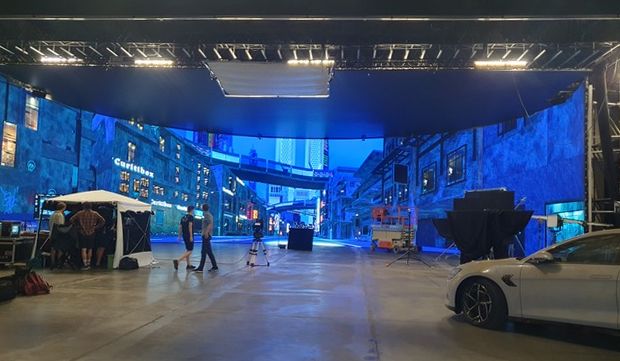
Virtual Production (VP) combines camera tracking, 3D game engines, and LED walls to blend the real world with virtual environments. Part of virtual production methods is the use of a LED wall as background for a live action shoot, also known as ICVFX (In-Camera Visual Effects). This production technique seamlessly blends physical and digital elements, enabling live adjustments on-set instead of post-production.
LED wall on the set of the sci-fi miniseries INTERCONNECTION from creator and director Marco Braune.
Key Changes to Traditional Pipeline include:
Pre-Production: Most digital production design tasks related to scenography like modeling, texturing and lighting are moved from post-production into pre-production. Creative decisions must be made earlier with greater urgency.
Production: Backgrounds are rendered in real-time on-set rather than added in post-production, and may move and shift as the camera moves. Actors perform against realistic environments instead of green screens.
Post-Production: Virtual Production streamlines post-production by integrating real-time VFX, reducing the need for extensive post-edits.
Benefits: Virtual Production reduces the need for expensive and time sensitive location shoots with a high carbon footprint, such as when filming a sunset. The virtual set allows filmmakers to create complex worlds for actors to interact. In addition, VP provides more realistic lighting and reflections on actors and objects compared to traditional VFX-pipelines.
Drawbacks: Poorly implemented Virtual Production might necessitate additional rotoscoping edits in Post-Production. The spatial limitations of the virtual stage make VP more suitable for atmospheric scenes with comparatively little movement than fast-paced action scenes.
Virtual Production shifts when and how creative decisions are made during film production, moving VFX work forward in the pipeline while enabling new ways of on-set visualization and collaboration.
Note: All web links were accessed on July 29, 2025.
Next Lesson
Theory of Media-Enjoyment
This lesson introduces the multidimensional nature of media enjoyment. It demonstrates how neurometric tools, such as GSR, can capture affective responses while being complemented by cognitive and behavioral measures, providing filmmakers with a richer basis for creative and study design decisions.