Course progress
0/10 lessons (0%)
Experimental Film Production Application Scenarios
In this module, we take neurometrics out of the lab and onto the film set, showing how biometric data can inform creative and technical decisions across every stage of production.
Film University Babelsberg KONRAD WOLF
September 30, 2025
Learning Objectives:
Understanding of the main stages and departments of film production.
Knowledge on how to apply neurometrics in the filmmaking process.
Understanding of a range of experimental application scenarios for neurometrics across development, production, postproduction, and distribution.
Film Production Departments and Production Stages
This lesson maps the filmmaking pipeline from development to distribution, showing how each stage shapes creative and technical outcomes. It sets the groundwork for experimental scenarios, such as testing scripts, performances, editing, or trailers, where neurometrics can be applied to connect audience experience with production choices.
Theory of Media-Enjoyment
Film Production Parameters for Neurometrics
The Film Production Parameters for neurometrics lesson turns theory into practical guidance, showing how GSR can be used to test hypotheses on pacing, structure, sound, performance, and design. By linking physiological responses to specific film production elements and experimental setups, it provides filmmakers with a basis for transforming audience signals into actionable insights that strengthen both artistic intent and viewer engagement.
Experimental Application Scenarios
This lesson introduces experimental application scenarios that show how neurometrics can move from abstract theory into the concrete realities of film production. By following a clear and repeatable structure, these scenarios demonstrate how physiological signals like GSR or EEG can be translated into practical insights for creative decisions. They remain flexible enough to adapt to different stages of filmmaking, budgets, and research questions.
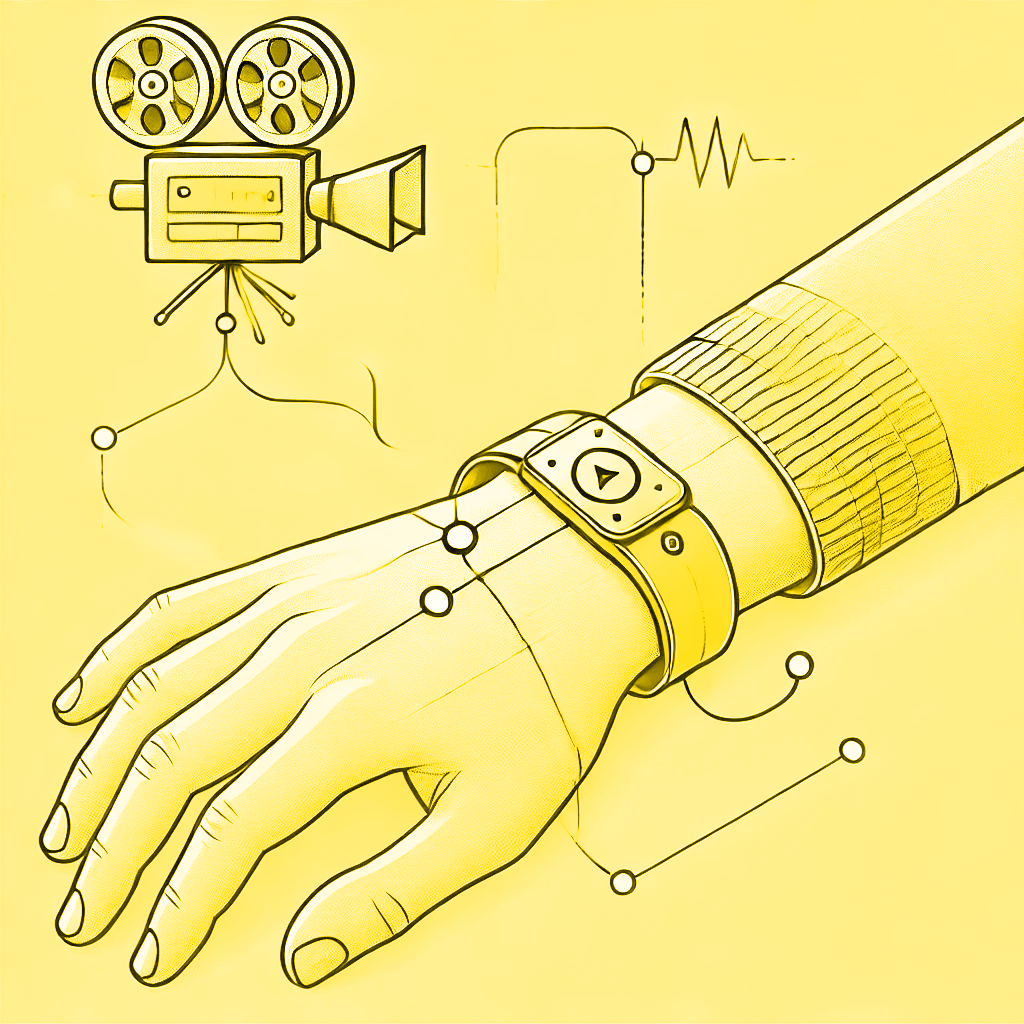
Neurometrics can support filmmakers at various stages of the production process, from the initial idea generation to the final steps of marketing and distribution. Film production is structured into a sequence of interconnected stages: development, pre-production, production, post-production, and distribution, each with its own unique creative and technical challenges. Within this workflow, neurometrics can serve as a bridge between audience experience and production choices.
Experimental application scenarios demonstrate how neurometrics can be applied in practice, including selecting concepts that resonate in early development, testing narrative complexity in script workshops, evaluating casting and performance, validating set and production design, comparing traditional and virtual production methods. They also include refining editing rhythm, calibrating music cue placement, and assessing VFX integration. They also include conducting data-supported test screenings and optimizing trailers for marketing. Physiological signals such as GSR provide feedback on attention, arousal, fatigue, and immersion, helping filmmakers identify when audiences are most engaged or at risk of disengagement.
Together, these approaches demonstrate that neurometrics is not limited to academic research but can be translated into concrete tools for filmmaking. By combining structured study design with creative exploration, neurometrics opens new possibilities for shaping films that are both artistically ambitious and attuned to audience experience.
Module: Experimental Film Production Application Scenarios Lessons
Explore the first lessons in this module
Lesson 1: Film Production Departments and Production Stages
This lesson maps the filmmaking pipeline from development to distribution, showing how each stage shapes creative and technical outcomes. It sets the groundwork for experimental scenarios, such as testing scripts, performances, editing, or trailers, where neurometrics can be applied to connect audience experience with production choices.
Jump to LessonLesson 2: Theory of Media-Enjoyment
This lesson introduces the multidimensional nature of media enjoyment. It demonstrates how neurometric tools, such as GSR, can capture affective responses while being complemented by cognitive and behavioral measures, providing filmmakers with a richer basis for creative and study design decisions.
Jump to LessonLesson 3: Film Production Parameters for Neurometrics
The Film Production Parameters for neurometrics lesson turns theory into practical guidance, showing how GSR can be used to test hypotheses on pacing, structure, sound, performance, and design. By linking physiological responses to specific film production elements and experimental setups, it provides filmmakers with a basis for transforming audience signals into actionable insights that strengthen both artistic intent and viewer engagement.
Jump to Lesson